From a TikTok character to the World Cup sidelines: the three years it took Diego Garro to change leagues
In 2023 he was a kid from Pérez Zeledón playing a character on TikTok. In June 2026 he released a World Cup song with Corney and Toledo, travelled to the tournament as an independent creator, and along the way built a YouTube channel that passed 10.6 million views in under two years. None of it happened overnight.
Updated

On 8 June 2026, two days before the World Cup kicked off, Diego Garro released a tournament song alongside Corney and Toledo. It is called «Alas Pa Volar», the music video was produced by Atómica Films and Boombazo Studio under executive producers Miguel Gómez and Dennis Gómez, and it opened a run that ended with both creators filming the 2026 World Cup from the inside.
Three years earlier, Garro was a kid from Pérez Zeledón playing a character called Albertillo on TikTok.
We have been working together for quite a while with Boombazo and Atómica, and we thought it was the perfect chance to make a song. Corney had already done tracks like Caribe and I had Pérez Zeledón, so we looked for a way to explore and make music together. This is the result.
Diego Garro, on «Alas Pa Volar»
Teletica ran the release the day it dropped, and La Nación confirmed four days later that Garro and Corney were travelling to the tournament.
They went to the World Cup, but nobody sent them
This is the detail most coverage skipped, and it is the one that changes the size of the story.
Garro and Corney were not part of Teletica's official delegation. They travelled as independent creators, working for their own platforms, and the broadcaster said so plainly: they would help out with certain content for its programmes as far as their own schedule allowed.
Read the other way round, that means something else entirely. A network with decades of history sent its usual correspondents, and then made room inside its World Cup operation — Teletica and TDMAX — for two guys who built themselves on TikTok. Nobody hired them to manufacture an audience. They were approached because the audience already existed.
Before the World Cup there was a song that started as a joke
Music did not arrive for Garro in 2026. It arrived in November 2023, in the least planned way possible: he got together with friends in a producer's studio to film a TikTok, and out came «Pérez Zeledón», a dembow track stuffed with references to his home canton.
The song reached number 3 on Spotify's 50 most viral in Costa Rica, with more than 80,000 YouTube plays and over 50,000 Spotify streams, according to La Nación. He was as puzzled as anyone:
I do not even know what is going on, we made it without thinking much about the impact it could have.
Diego Garro, in 2023
In that same interview he said he did not consider himself a singer, but that if the inspiration came back he would take the chance. Three years later he took it, and the song that came out was the World Cup one.
The YouTube channel he opened less than two years ago
While all of that was happening, Garro was quietly building the least glamorous and hardest part: long-form video.
He opened his YouTube channel on 13 October 2024 and introduced it without a shred of ceremony. The bio still reads, in Spanish, that it is the same fool making videos, only now on YouTube, with longer and more interesting content.
Where the numbers stand as of 5 September 2026:
- 179 videos published in under two years
- 70,400 subscribers
- 10,665,914 total views
- His most-watched video, about a spot in Costa Rica where gravity appears to stop working, sits at 918,000 views
Across his three platforms, the qcrew catalogue counts 1.05 million followers: 743,400 on TikTok, 242,400 on Instagram, and the YouTube channel that started from zero twenty-three months ago.
Long-form is not a break from short-form for him. It is where he tries what will not fit in fifteen seconds: abandoned water parks, empty malls that look like a backroom, challenges built around spending a thousand colones. That is craft, and it shows in the curve.
Why this matters to the Costa Rican community
Garro's run dismantles two beliefs that sink creators every week.
The first is that you have to pick one format. He did not pick: he makes sketches with Corney, songs with Toledo, and thirty-minute videos on his own. Each one fed the others.
The second is that you have to be from the capital. Garro is from Pérez Zeledón, he wrote a song about his own canton, and that song is what put him on the national map. Pérez Zeledón was never the obstacle. It was the material.
Our goal, plainly stated
qcrew exists so that every creator in Costa Rica reaches the viewers already looking for them.
Diego Garro did not need anyone's permission to get to a World Cup. He needed three years of publishing, a character people recognised, and people beside him — Corney, Toledo, Boombazo, Atómica — willing to build something bigger than one video.
That last part is what Costa Rica is shortest on, and it is the cheapest thing to fix: nobody knows who else is out there filming.
A creator alone gets as far as their own account reaches. Three creators together get to a World Cup.
In pictures
Photos published by the creator on their own platforms. Tap any of them to see it at the source.
 Probé Toda la Comida Viral de Tik Tok Costa Rica 🇨🇷🍽️
Diego Garro / YouTube
Probé Toda la Comida Viral de Tik Tok Costa Rica 🇨🇷🍽️
Diego Garro / YouTube
 Probé Toda la Comida de ¢1,000 en Costa Rica 🇨🇷
Diego Garro / YouTube
Probé Toda la Comida de ¢1,000 en Costa Rica 🇨🇷
Diego Garro / YouTube
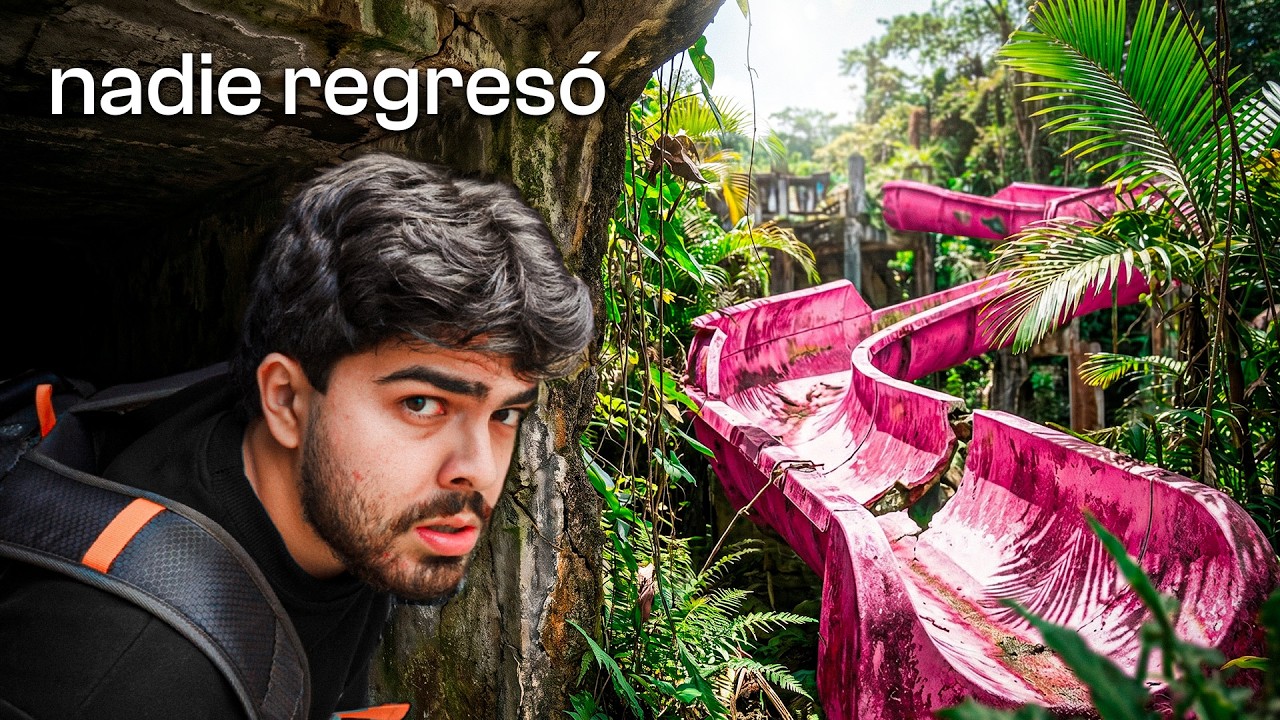 Investigué el Parque Acuático Abandonado de Costa Rica 🇨🇷 | Waterland
Diego Garro / YouTube
Investigué el Parque Acuático Abandonado de Costa Rica 🇨🇷 | Waterland
Diego Garro / YouTube
 Este Centro Comercial es un BACKROOM | Plaza Paraíso en Costa Rica 🇨🇷
Diego Garro / YouTube
Este Centro Comercial es un BACKROOM | Plaza Paraíso en Costa Rica 🇨🇷
Diego Garro / YouTube


